
無線感測
LoRaWAN 溫度、濕度、漏水、電源及乾接點輸入。
申請_01 · 建築物
在不打開整棟建築的情況下,現代化現有的樓宇管理系統。
在您現有的 BMS 周圍添加無線感測、協議連結和清晰的工作流程。
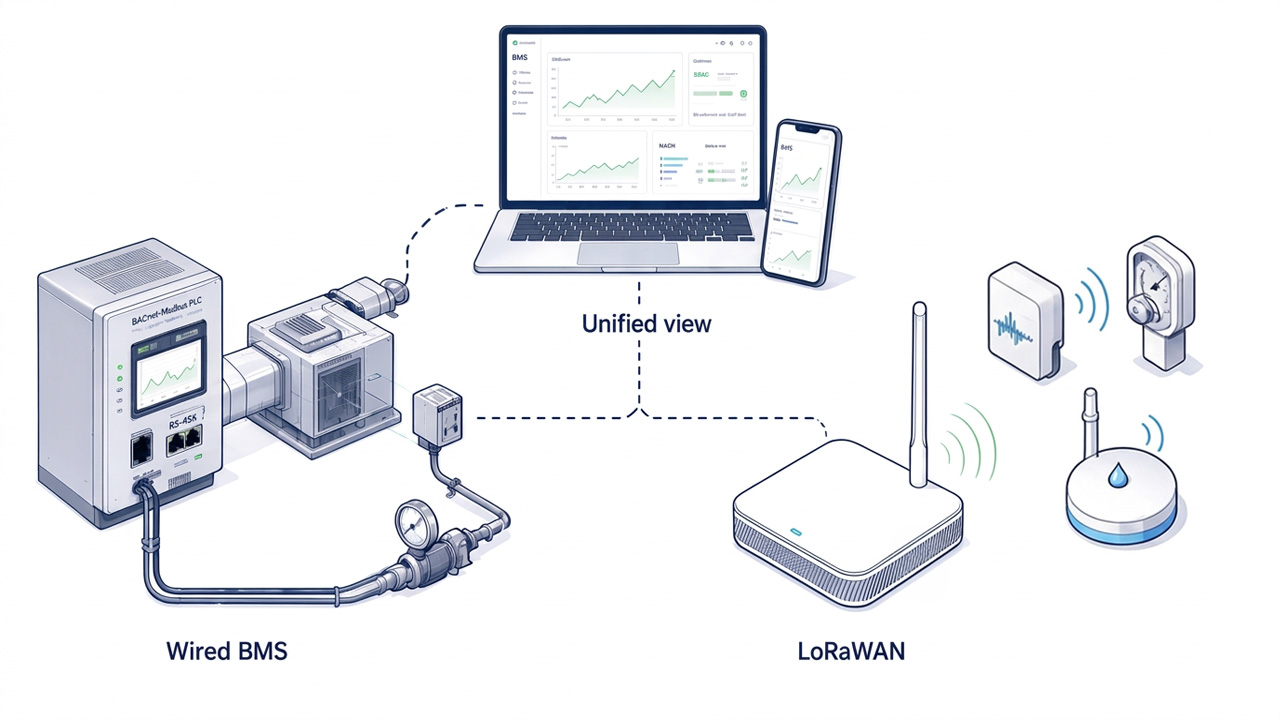
一瞥
LoRaWAN 溫度、濕度、漏水、電源及乾接點輸入。
將 BACnet、Modbus、類比和 I/O 信號整合到同一個視圖中。
查看設備狀態、警報、能源趨勢、報告和工作狀態。
解決方案的功能
在新的電纜布線會造成干擾、成本高或有風險的地方使用無線傳感器。
將舊有的 BMS 點數與新的物聯網數據整合到同一個儀表板中。
將路徑閾值違規轉交給正確的團隊,然後保留回應記錄。
追蹤需求、運行時間和操作趨勢,以指導實際改進。
儀表板視圖
設定角色、門檻、地點及升級規則以符合您的團隊。從下方的檢視開始,然後進行調整。
操作流程
添加無線傳感器、計量器和橋接 IO。
轉發 LoRaWAN 和舊有協議的數據。
繪製設備、房間、警報和趨勢圖。
使用報告和工作流程來完成閉環。
常見問題
Yes. Keep your existing BMS and control logic. Add battery LoRaWAN (or similar) sensors where rewiring would disrupt the building. An edge gateway maps readings to BACnet or Modbus — and MQTT for dashboards — so the building stays in service. Most sites pilot one floor or area before scaling.
A hybrid retrofit keeps wired control where certainty matters and adds wireless sensing where the fabric cannot be opened. You get one operating view for legacy controllers and new sensors. Typical triggers are IAQ, leak, temperature or occupancy gaps — without a full capital BMS swap. WSmart acts as integrator and software layer, not hardware-only.
Deploy wireless IAQ sensors; a gateway exposes points to BACnet and/or an MQTT platform. The BMS can then trend and alarm IAQ alongside HVAC points — useful for offices, malls and logistics sites without a full rewire. WSmart’s differentiator is software workflows and a multi-protocol ops layer, not sensors alone.